

Gi vs no-gi jiu-jitsu is a conversation most grapplers end up having at some point, and people tend to feel strongly about both. The gi is the traditional form of Brazilian Jiu-Jitsu, and no-gi has grown into a competitive path of its own. Both are contested at the top level, and organizations like the International Brazilian Jiu-Jitsu Federation (IBJJF) hold championships in each format.
The core techniques overlap more than most people expect. What changes is what each person has to hold on to, how fast the exchanges move, and which positions pay off. Neither format is a lesser version of the other.
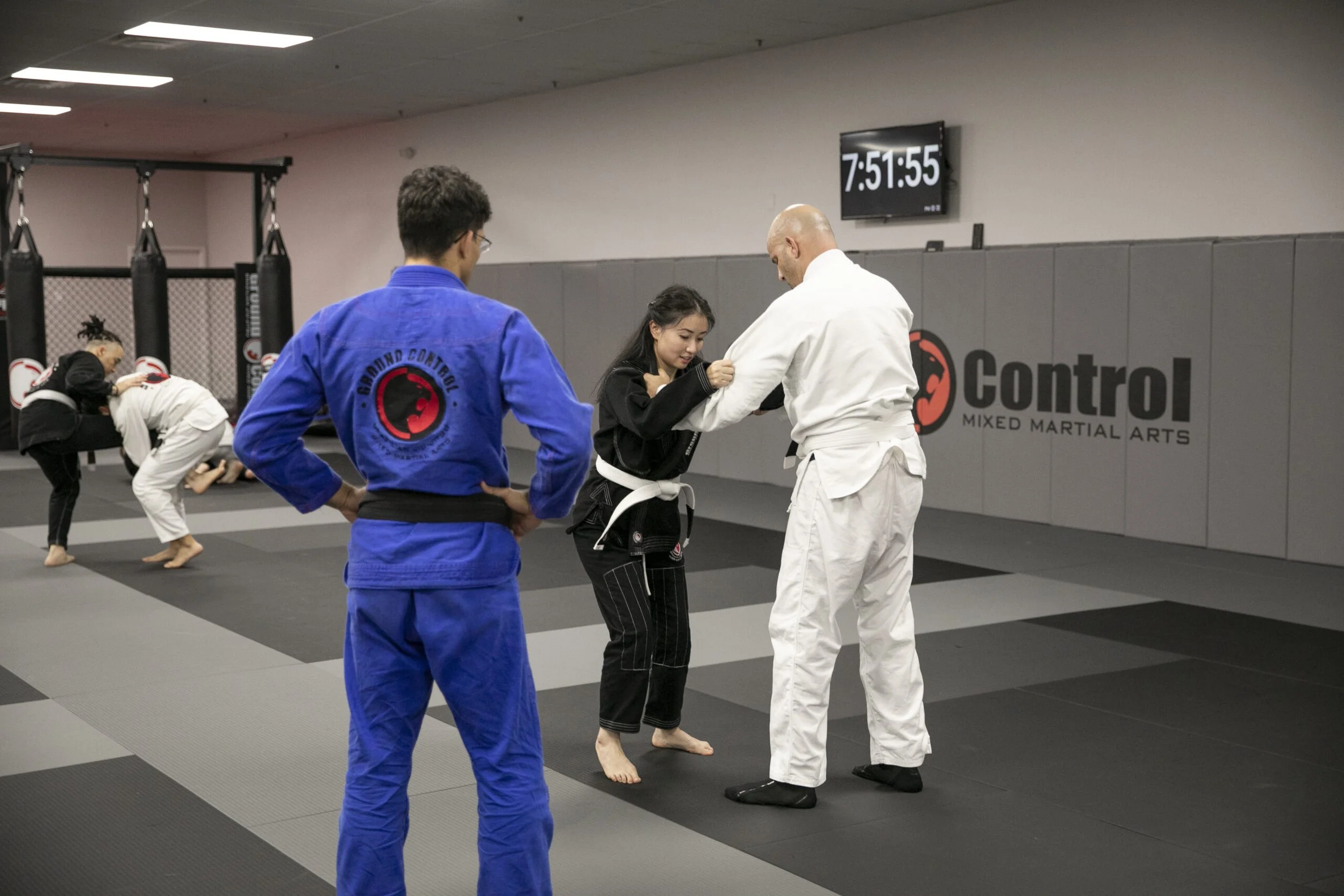
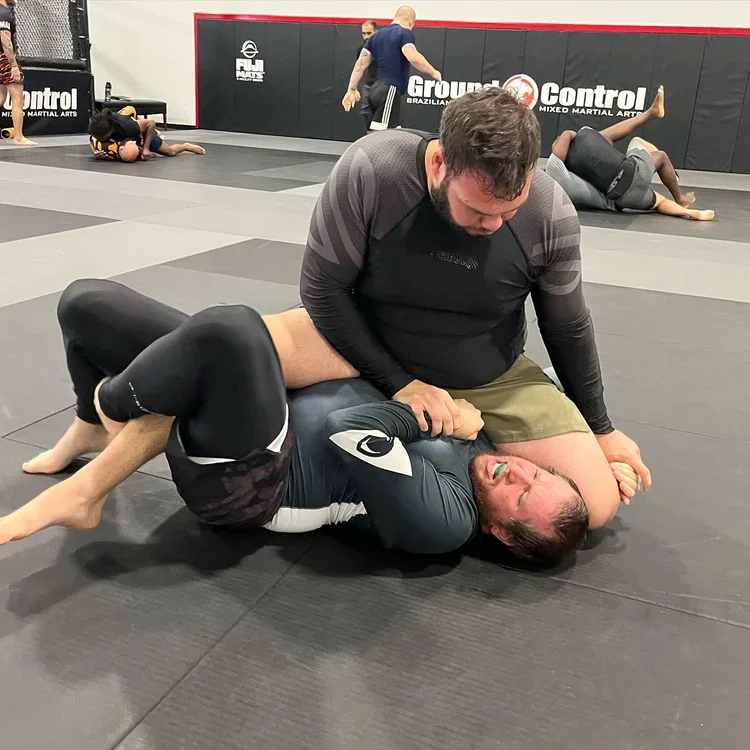
Gi vs No-Gi Jiu-Jitsu: Grips and Control
In the gi, the collar, sleeves, lapel, and pants give both people fixed handles. A large part of any exchange is the grip fight: getting the grips you want and breaking the ones you do not. Those handles let a grappler control distance, pull a partner off balance, and set up sweeps and passes.
No-gi still has plenty of grips. They just come from the body instead of the clothing. Wrist control, underhooks, overhooks, head control, and body locks do the work that a sleeve or collar would do in the gi, and since everything gets slick with sweat, those holds often have to be re-established.
Pace and Scrambling
Clothing grips can slow an exchange down. Once a strong grip is in place, it takes real effort to break, so positions can be held longer and the pace often builds gradually. That patience and attention to detail is a big part of what draws many people to the gi.
No-gi tends to move faster. With less clothing to hold on to, partners can slip out of positions more easily and scrambles can happen more often. Consider a guard pass: in the gi, a grip on the pants or lapel can help a passer manage the hips and limit guard recovery. In no-gi, the passer often has to control the legs, hips, and upper body directly to keep the guard from being recovered.
Our look at how scrambles work in no-gi goes deeper on those exchanges.
Guards, Submissions, and Takedowns
Many gi guards are built around clothing grips. Spider guard, lasso guard, and worm guard all depend on sleeve or lapel grips to manage distance and posture. In no-gi, guards like butterfly, half guard, and seated guard lean on underhooks, head control, and body position, and leg entanglements tend to show up more often.
Armbars, triangles, kimuras, and rear-naked chokes work in both formats, though the details of the finish can change with and without fabric to grab. Cross-collar chokes depend on the gi itself. Guillotines, D'Arce chokes, and anacondas are common in no-gi, but none is exclusive to it. Which submissions are legal also depends on the organization, belt level, and format, particularly for leg attacks.
Takedowns follow the same split. In the gi, judo-style grips on the lapel and sleeve open up throws and trips. Without them, takedowns tend to come from wrestling, such as single legs, double legs, snap downs, and body locks. Wrestling and judo principles can still carry across both formats; what changes is how the grip and setup work.
Where No-Gi Connects to MMA
With no jacket to hold, control in no-gi has to come from the body: head position, underhooks, wrist control, and body locks. Those same grips and positions are what a fighter has to work with in MMA, which is why no-gi tends to translate more directly. The wrestling-style takedowns and scrambles that go with it also look a lot like what happens in the cage.
MMA adds challenges that a no-gi BJJ match does not. Fighters have to account for strikes and the cage, and a position that works well when the main concern is a submission may need to change when punches are possible. No-gi gives fighters useful grappling tools, but applying them in MMA requires those extra considerations.
None of that makes the gi less useful for someone interested in MMA. Pressure, balance, and positional control are built in both formats, and plenty of fighters have trained in both. Our guide to moving from BJJ to MMA covers that transition in more detail.
Why Many Grapplers Train Both
Each format can hide something the other exposes. A strong grip in the gi can cover for loose body positioning, and no-gi shows that quickly. A fast scramble in no-gi can bury a missing technical detail, and the slower grip fighting of the gi tends to bring it back to the surface.
That is why a lot of grapplers treat the two formats as a pair. Time in the gi sharpens how a person thinks about grips and posture, and time in no-gi sharpens how they control a body without clothing grips. There is nothing wrong with having a favorite, either. Both formats offer plenty to work on, and training across them can make familiar habits easier to spot. Whichever format you start with, the fundamentals carry over. Ground Control Owings Mills offers Brazilian Jiu-Jitsu and MMA classes for anyone who wants to try them.